
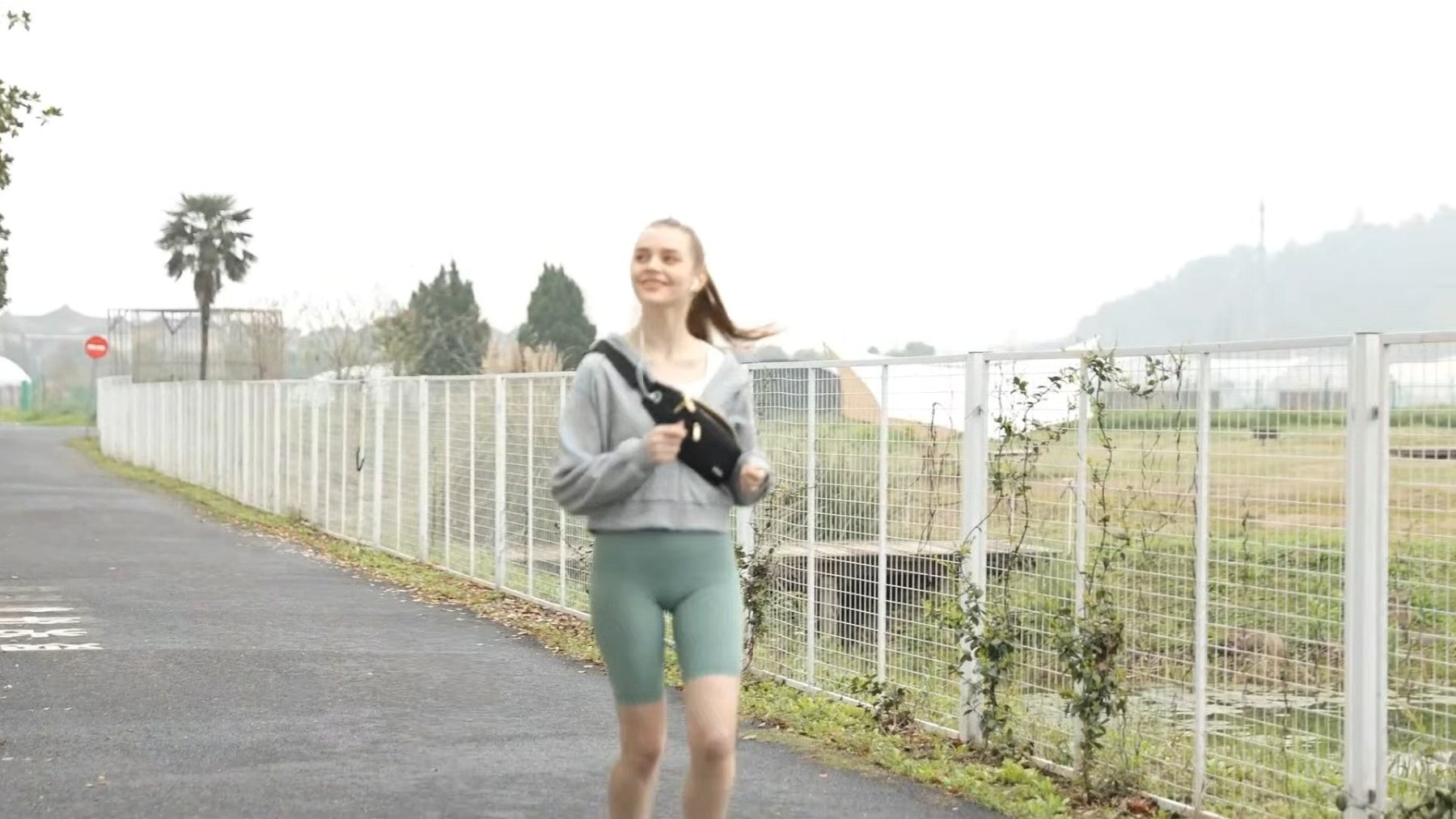
Most runs start with the same small problem. You want the phone for music, the map or the call you might need to make, and you want the house key, and neither belongs in your hand for five miles. Where you put them decides whether you notice them for the next hour or forget they are there.
What you actually need on a run
Lay it out before you lace up. For most people it is a phone, one key, maybe a card and some cash for the coffee afterwards. That is the whole load, and it weighs less than the water bottle you left on the counter.
Anything beyond that list is a choice to carry more, and it changes which bag makes sense.
Running belt or fanny pack: depth decides
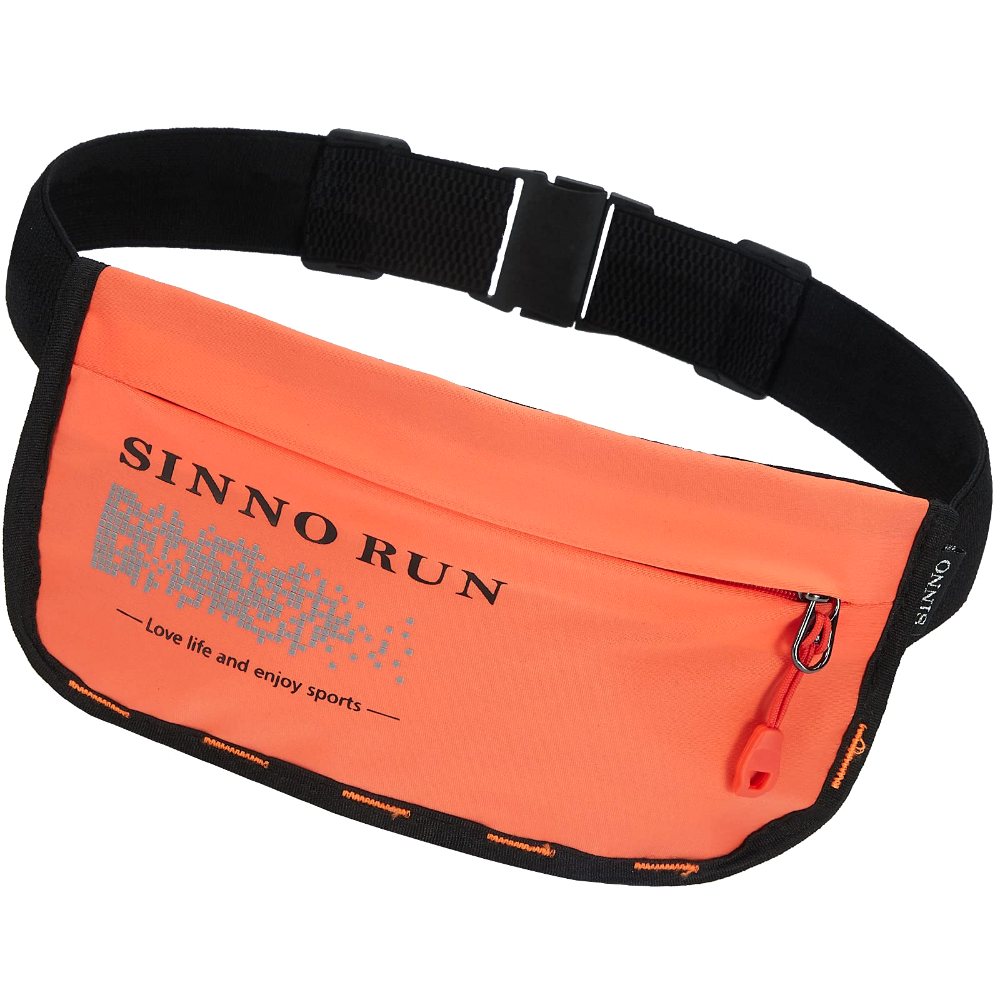
The difference between our two waist bags for moving fast is not the length. It is how far each one stands off your body.
| Running belt | Large fanny pack | Slim fanny pack | |
|---|---|---|---|
| Depth | 0.7 in | 3.5 in | 1.5 in |
| Size | 9.7 × 4.7 in | 13.5 × 5 in | 13.5 × 5 in |
| Fits | 30 to 42 in waist | 26 to 51 in waist | strap up to 51 in |
| Phone | up to 6.5 in | any size | any size |
| Pockets | 2 zip | 4 zip + 1 inside | 4 zip + 1 inside |
The running belt is a stretch Lycra sleeve 0.7 inches deep. The product description says it fits tight so it does not bounce while you run, and the reason is plain from the numbers: there is almost nothing to swing. The trade is room. It takes a phone up to 6.5 inches, not a big phone in a thick case.
The large fanny pack is five times deeper. It holds a phone of any size and keeps your keys in a separate pocket, which makes it the better bag for a long walk, a hike or a run that ends at a café. Worn loose it will move. Snug the strap down before you set off and it moves a lot less.
The slim pack sits between them: the same outline as the large one at 1.5 inches deep.
Getting the fit right at your waist
Put the belt on over the clothes you run in, not over jeans. It adjusts from a 30 to a 42 inch waist, and it should sit where your shorts sit, not on your hip bones.
Jog on the spot for ten seconds. If the pocket climbs, tighten the buckle a notch. If you feel the edge of the phone against your stomach, turn the belt so the pocket sits a little to one side. Both checks take less time than retying a shoe.
Early mornings and after dark
A bag carries your phone. It does not make you visible, and none of our bags is reflective, so the dark part of the year needs its own plan.
The National Highway Traffic Safety Administration tells pedestrians to wear bright colors during the day and reflective materials or a flashlight at night. Its pedestrian safety page adds that where there is no sidewalk, you should walk facing traffic. Running on the road shoulder at six in the morning is exactly the case both pieces of advice were written for.
The orange of our running belt is bright in daylight. At night it is just a dark shape at your waist. Put the reflective layer on top, and treat the belt as what it is: somewhere to keep the phone.
Earbuds, the screen and the road
NHTSA also tells pedestrians not to let devices take their eyes and ears off the road. On a run that means two things you control before you leave. Pick the playlist at the door and zip the phone away, so you are not reading a screen at a crossing. And keep the volume low enough to hear a car coming up behind you.
The large and slim fanny packs have a small port for a wired earbud cord, so the phone stays zipped in while you listen. Wireless earbuds need no port at all. Either way, the phone in a closed pocket is a phone you are not looking at.
After the run
Take the phone and key out first, then rinse the sweat out of the Lycra under the tap and hang the belt to dry. Pack it away damp and the next run starts with a clammy pocket.
The fanny packs are water-resistant nylon rather than stretch fabric. Wipe them down with a damp cloth and let them dry with the zippers open.
A question about a bag in this piece? Write to hipline@sinnostore.com and the SINNO team will answer.